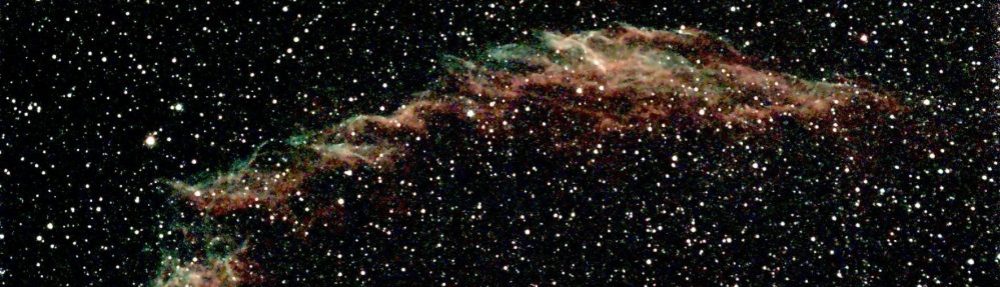
I’m about to embark on a new adventure.
I recently purchased a small scope for wide-field astrophotography, a Founder Optics Draco 62. I’m going to set it up on a Juwei 17 mount which in turn will sit on an Innorel RT90C tripod. I’ll need a pier extension to lift the scope out of the way of the tripod legs, but I have yet to decide on the specific extension – probably something from Alibaba. I expect the default imaging camera will be a QHY miniCAM 8 mono combo unit (currently on order) but I’ll swap other cameras in and out as I go, trying to find the best fit for wide-field with this scope.
I’ll try to report back as I learn more about the mount, the camera, and the scope itself. From time to time I will swap the small scope out for another larger refractor such as the ES152CF or possibly my SCT, a Celestron 9¼ Edge HD scope. The larger scopes might stretch the weight limits of the Juwei 17, and in any case will have to wait for the pier extension.
So far this year hasn’t been astronomy friendly, and there’s little good news in view: it’ll be either cold (i.e. below about -10°C*) or cloudy according to the long range forecasts, and I’ll be staying in the city for the next couple of months, so even if conditions improve I’ll be imaging in Bortle 8-9 skies. My daughter snapped a shot of my observatory when she was up at the cottage the day after a snowfall (see below), and it’s my justification for staying home:
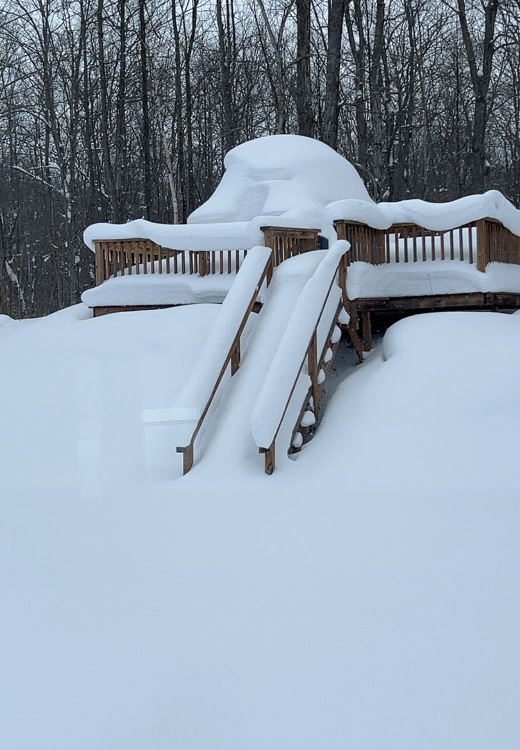
*I’m an old man: I try to stay indoors when it gets below freezing, and -10º is about my limit for outdoor activity, even bundled up. The equipment is generally more sturdy.
 Dark Nights